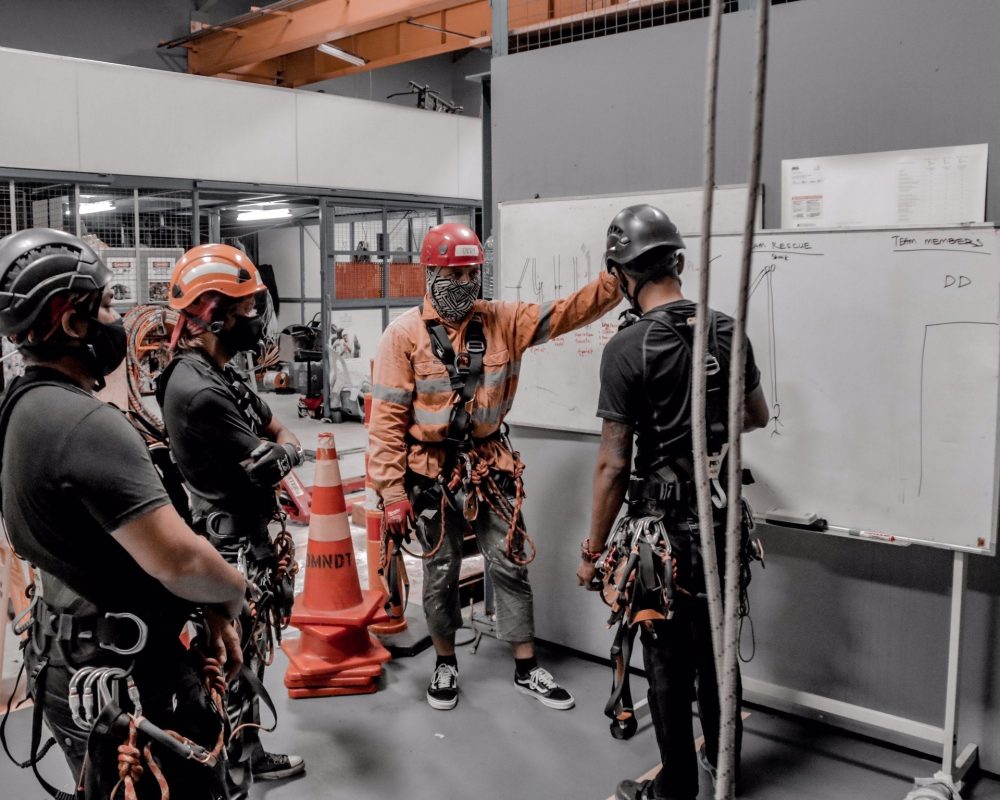
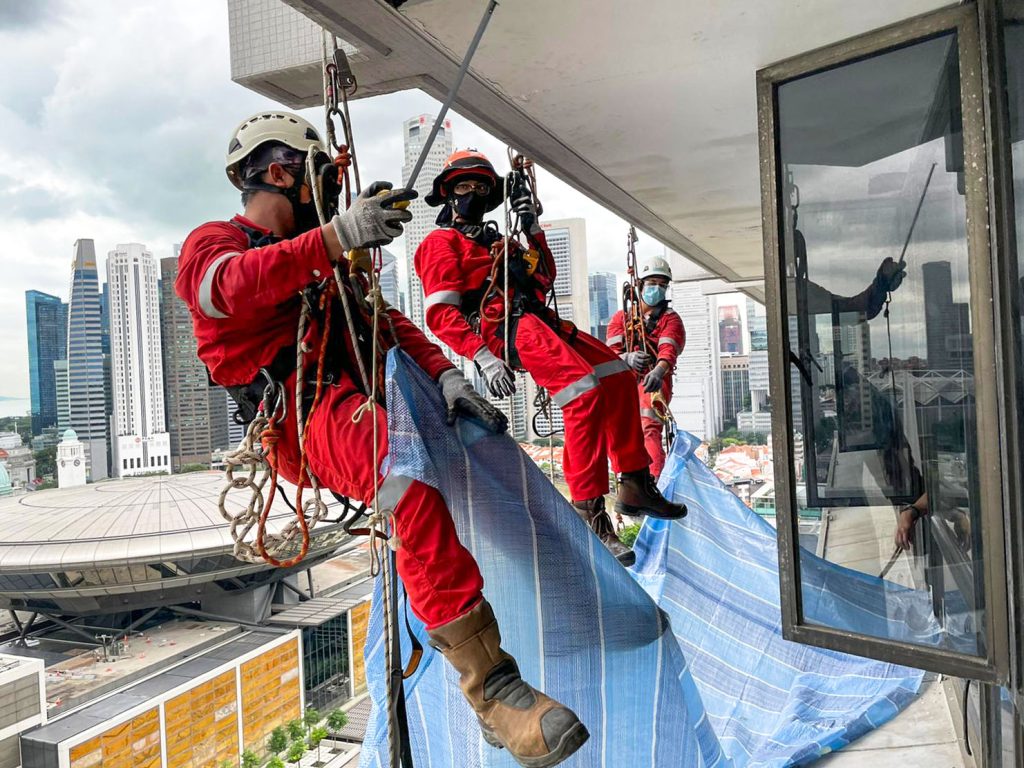
IRATA stands for Industrial Rope Access Trade Association which is the leading international organisation providing the highest standardised rope access training for individuals who work at height. IRATA was established in response to a specific need in the inspection and maintenance of offshore oil platforms, evolving over the last 30 years to become the gold standard rope access training and accreditation provider for work-at-height and confined access sectors.
Frequently Asked Questions
Can trainees work as rope access technicians whilst undertaking IRATA training?
Most students who begin training with us want to become professional IRATA rope access technicians. Upon completing IRATA Level 1 training, technicians can begin to work in the field and make progress with each level of training completed.
What are the different levels of IRATA training?
IRATA Level 1 - Rope Access Trainee Technician
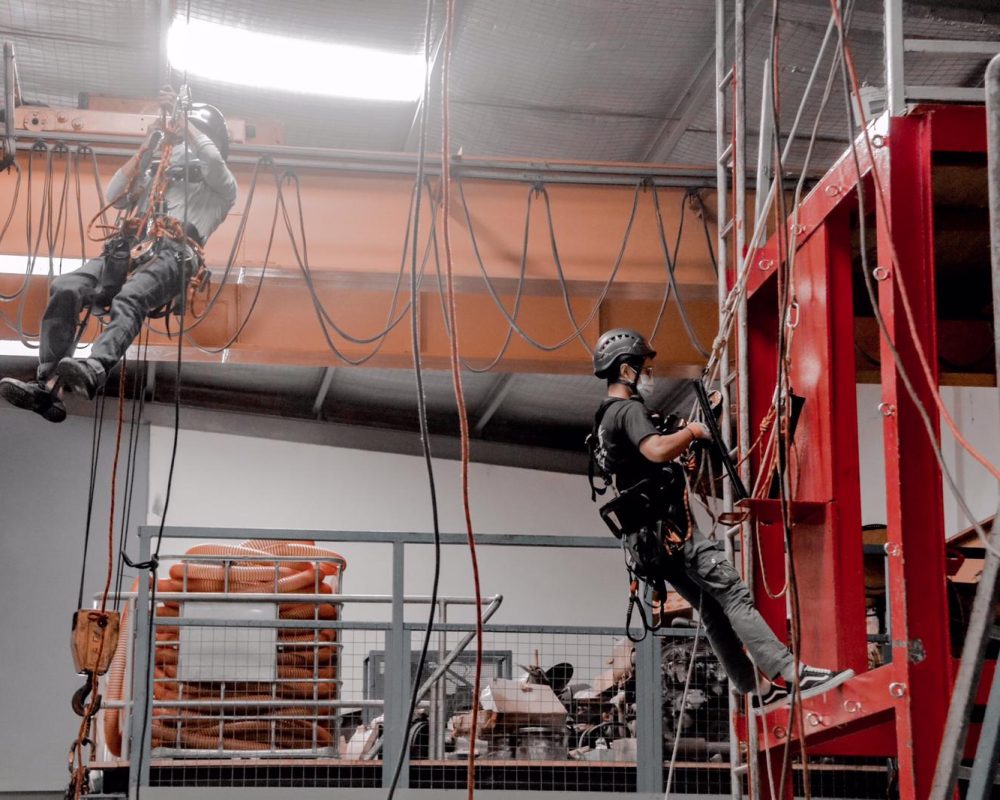
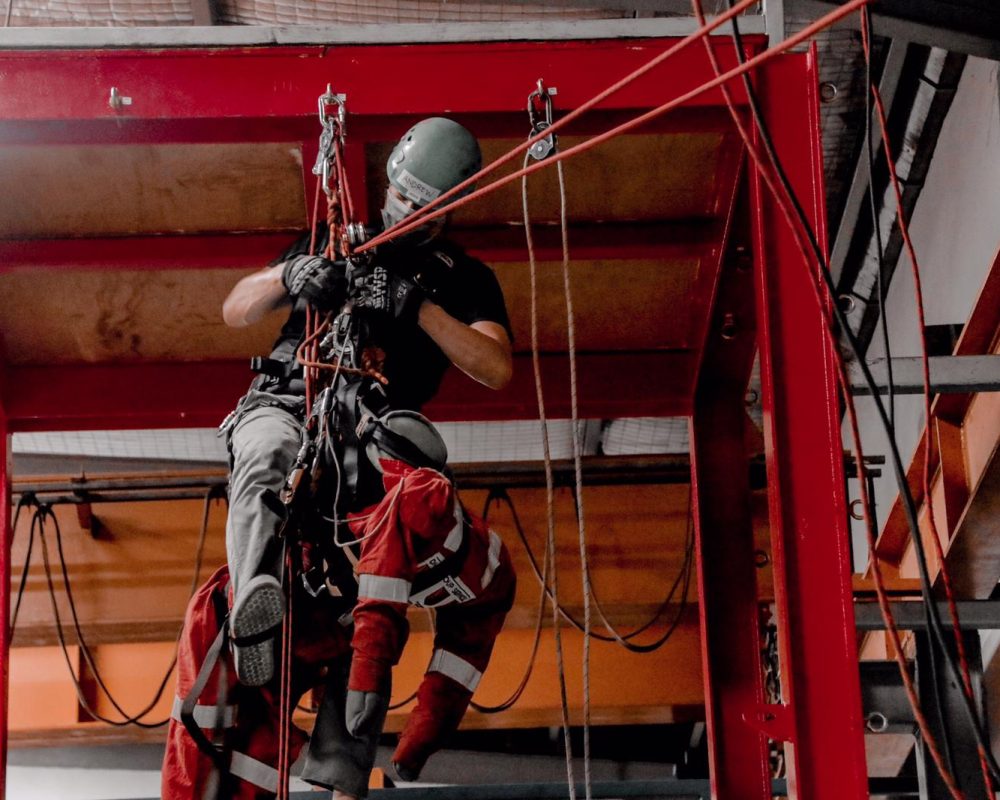
A Level 1 rope access technician can perform some rope access tasks including inspection of all personal rope access equipment, assisting in rigging and non-standard operations, and undertaking a rescue involving descent under the supervision of an IRATA level 3 rope access supervisor.
IRATA Level 2 - Rope Access Operative Technician
A Level 2 rope access technician can perform rig works using rope access, undertake rescues and perform other tasks under the supervision of IRATA level 3 rope access supervisor. They are also exposed to some legislation, safety requirements and quality assurance procedures relating to rope access.
IRATA Level 3 - Rope Access Supervisor
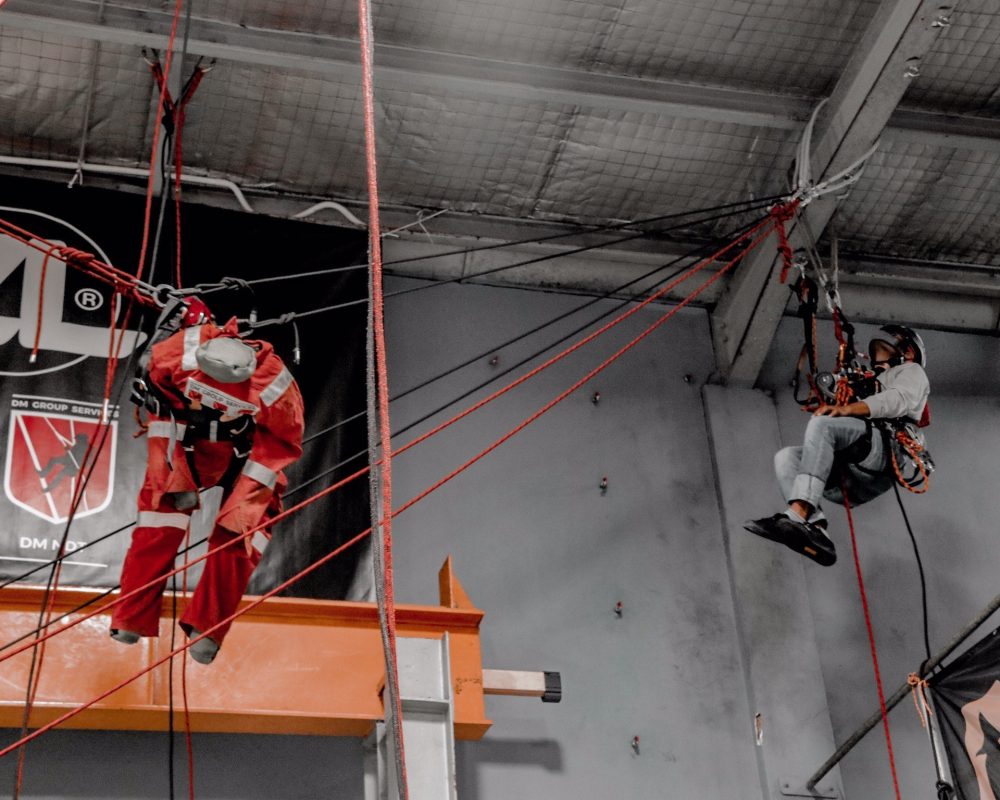
A Level 3 rope access technician can supervise onsite rope access projects. By this stage, they're exposed to all working techniques, advanced rescue techniques, IRATA certification scheme, and general requirements and guidelines. They will also have completed emergency first aid training.
When do you run IRATA courses and what is the cost?
All our programmes run on a rolling basis. Please get in touch for full details and course costs.
Does DM NDT offer other training course or programmes?
Yes, we provide a suite of additional industrial training programmes which you can view here.
What is included in the course?
All the equipment for training will be provided in the course cost. On passing the assessment the candidates will receive an IRATA Certificate included in the course cost.
What are the training requirements?
Below are the training requirements by Level.
Level 1:
Candidates must be at least 18 years old and physically fit, free from any disability or medical condition that could affect their ability to work safely. They should be capable of performing tasks that require strength, agility, and coordination, and be able to handle environmental stressors like heat and cold. Candidates must also be able to read, write, and speak English for effective communication on site.
It is recommended that all candidates obtain a full industrial medical certificate before starting work and undergo regular re-assessments. If a full medical certificate is not available, trainees must sign the Candidate Disclaimer and liability release form from IRATA.
Level 2 & 3:
Candidates seeking an upgrade must be proficient in all practical and theoretical aspects of their current level before attending an upgrade course. For example, a Level 1 candidate must be able to perform all Level 1 techniques and answer Level 1 theory questions before attending a Level 2 course.
If candidates are not competent at their current level, they may need additional training. Since upgrade courses allow limited time for refresher training, pre-course evaluations are recommended to confirm candidates’ skills.
Candidates wishing to upgrade must ensure that: a) their certification is valid on the day of assessment; b) they have at least one year of experience and 1,000 hours of work documented and signed off in their logbook.
Note: To clarify, "1 year of experience" means a technician can be assessed for an upgrade one year and one day after their last assessment. For example, if a Level 1 assessment is on April 1, 2024, the earliest they can take the Level 2 assessment is April 2, 2025.
Rope access Technicians who are upgrading or revalidating must provide their logbooks to the IRATA International trainer company at the start of the training course. If a technician has lost their logbook, they need to obtain a replacement and have it completed and verified before the assessment.
What happens if you fail IRATA?
Our passing rate is 97%. However, if you don’t pass the course, you can re-evaluate and retake it. Please note, you cannot do the assessment on the same day and will need to wait for at least 7 days to re-evaluate again. The first reassessment will be on a 50% discounted fee.
Does IRATA training expire?
The certification of each level is valid for 3 years after their previous assessment. Once your certification expires, you are no longer allowed to practice rope access. If you fail your re-certification, your certificate is no longer valid, even if it's not expired. In some cases, your assessor may allow you to continue the assessment for a lower level.
In very rare circumstances, IRATA may withdraw your certification before the expiry date due to lack of safety, abusing your IRATA certification, and falsifying information.
Certificates are issued to the name of the Rope Access Technician and not the employer.
How long are the IRATA courses?
The IRATA course is designed to run for 5 days, Monday through Friday, with assessment sessions scheduled for the weekend following the completion of the training.
What do I get when I pass?
Once you pass your assessment on the last day, you will receive a copy of your assessment. Your certification and Logbook (only If you are newcomer) is processed and mailed from IRATA within 14 working days.
What are the benefits of being an IRATA Level 3 Rope Access Technician?
- Capable of supervising rope access projects on site
- Familiar with relevant work techniques and regulations
- Able to demonstrate all skills and knowledge from Levels 1 and 2
- Possesses advanced rescue techniques knowledge
- Understands the IRATA certification scheme
- Knowledgeable about the IRATA Training and Assessment Certification Scheme (TACS) and familiar with the IRATA ICOP contents
Our Services

ACCREDITATIONS